The Rise of Chinese Haute Horlogerie: Why Serious Collectors Are Paying Attention
There is a quiet revolution happening in Chinese horology, and most Western collectors are only beginning to notice. While the conversation in collecting circles has long orbited the Swiss, German, and Japanese triumvirate, a new generation of Chinese watchmakers is producing timepieces that challenge assumptions about what haute horlogerie means and where it can come from. The question is no longer whether Chinese watches deserve a place at the table. It is whether collectors who ignore them are missing one of the most significant developments in modern watchmaking.
A Civilization That Measured Time Before the West
To understand the ambition behind Chinese haute horlogerie, one must first understand the context. China's relationship with precision timekeeping predates the Swiss watch industry by centuries. The astronomical clock tower built by Su Song during the Northern Song Dynasty in 1088 was a marvel of mechanical engineering -- a forty-foot structure incorporating an escapement mechanism, an armillary sphere, and a celestial globe, all driven by a waterwheel. It tracked solar terms, lunar phases, and star positions with an accuracy that would not be matched in Europe for another three hundred years.
The Jesuits brought European clockmaking to the Chinese court in the sixteenth century, and by the Qing Dynasty, the imperial workshops in Beijing and Guangzhou were producing clocks and watches of extraordinary quality -- pieces that now command serious prices at Christie's and Sotheby's. Emperor Qianlong's personal collection of European and Chinese-made timepieces numbered in the thousands. This was not a culture unfamiliar with mechanical precision.
The Fracture: Cultural Revolution and Its Aftermath
The Cultural Revolution of 1966-1976 devastated China's nascent watchmaking infrastructure. Master craftsmen were persecuted, workshops shuttered, and centuries of accumulated knowledge scattered. The state-owned factories that survived -- principally the Beijing Watch Factory (established 1958), the Tianjin Sea-Gull Watch Group (established 1955), and the Shanghai Watch Factory (established 1955) -- were redirected toward mass production of utilitarian timepieces. The emphasis was volume, not virtuosity.
For decades afterward, "Made in China" became synonymous in the watch world with cheap movements, dubious quality, and outright counterfeiting. This reputation was not entirely unearned. The Shenzhen manufacturing corridor that emerged in the 1980s and 1990s became the global engine of affordable watch production -- and also a major source of counterfeit luxury goods. The shadow of this period still darkens perceptions of Chinese watchmaking in Western collecting circles.
But to judge Chinese horology solely by its lowest expressions is roughly equivalent to judging Swiss watchmaking by the output of a souvenir shop in Interlaken. The reality on the ground in 2026 is far more nuanced -- and far more impressive.
Beijing Watch Factory: The Quiet Master
The Beijing Watch Factory has emerged as arguably the most technically accomplished watchmaker in China, and its achievements deserve scrutiny from any collector who takes mechanical watchmaking seriously. The factory's tourbillon production, which began in earnest in the early 2000s, has evolved from competent imitation to genuine innovation.
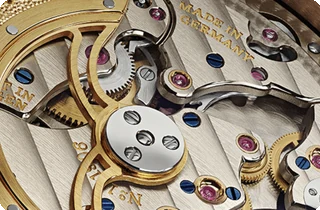
Their signature piece is the multi-axis tourbillon -- a complication that even most Swiss manufactures have not attempted. Beijing Watch Factory's double-axis and triple-axis tourbillons employ inclined cage architectures that rotate on multiple planes simultaneously, theoretically compensating for gravitational error in every orientation. The finishing, while not yet at the level of a Greubel Forsey (a comparison the factory itself would acknowledge), has improved dramatically. Hand-beveled bridges, Geneva striping executed with genuine care, and polished screw heads that stand up to a loupe suggest a workshop culture that has internalized, not merely copied, the standards of Swiss finishing.
Perhaps more remarkable are their enamel dials. Traditional grand feu enamel work -- the painstaking process of layering powdered glass onto a metal substrate and firing it at temperatures above 800 degrees Celsius -- is one of the rarest skills in watchmaking. Only a handful of workshops worldwide possess the capability, including Donze Cadrans in Switzerland and a few artisans in Japan. The Beijing Watch Factory has developed in-house enamel capability that produces dials of striking depth and luminosity, often incorporating traditional Chinese motifs -- cloisonne dragons, landscapes drawn from Song Dynasty paintings -- with a technical execution that has earned grudging respect from European enamelists.
The price point is equally notable. A Beijing Watch Factory tourbillon with hand-finished movement and enamel dial typically retails between $5,000 and $15,000 -- a fraction of what comparable Swiss complications command. This is not a reflection of inferior quality so much as a different cost structure: lower labor costs, yes, but also a domestic market that does not yet support Swiss-level pricing for Chinese brands.
Seagull: The Movement Maker to the World
If Beijing Watch Factory represents the artisanal pinnacle of Chinese horology, the Tianjin Sea-Gull Watch Group represents something arguably more consequential: the industrialization of mechanical watchmaking at a scale and quality level that has quietly reshaped the global industry.

The Seagull ST19 chronograph movement deserves particular attention. Based on the Venus 175 -- a respected Swiss column-wheel chronograph caliber from the mid-twentieth century -- the ST19 has become the world's most widely used mechanical chronograph movement. Its tooling was originally acquired from the Swiss, and Seagull has manufactured it continuously since the 1960s, refining production quality over six decades. Today, the ST19 and its derivatives power chronographs from dozens of microbrand and independent watchmakers worldwide, from Baltic in France to Dan Henry in the Philippines. When collectors praise a $500 mechanical chronograph for its "Swiss-style column-wheel movement," they are often, whether they know it or not, praising Chinese manufacturing.
Beyond the ST19, Seagull's in-house caliber development has accelerated. Their tourbillon movements -- produced at a scale no Swiss manufacturer could match -- have brought this once-exclusive complication to price points under $2,000. While purists may object to the democratization of a complication traditionally reserved for the horological elite, the technical achievement is undeniable. Seagull produces an estimated 25 percent of the world's mechanical watch movements, a figure that gives them manufacturing scale and iterative learning opportunities that few Swiss companies can match.
The New Wave: Independents With Global Ambition
The most exciting developments in Chinese horology may be coming not from the state-owned legacy factories but from a new generation of independent brands founded by designers and watchmakers who understand both Chinese craft traditions and Western collector expectations.
Atelier Wen, founded by two French-Chinese entrepreneurs, represents perhaps the most sophisticated bridge between Chinese manufacturing capability and international design sensibility. Their dials -- produced in collaboration with traditional artisans -- feature guilloche patterns machined in-house, fired enamel, and hand-engraved motifs. Movements are sourced from Hangzhou Watch Company and decorated to a standard that belies the sub-$2,000 price point. The brand has been covered extensively by Hodinkee and SJX Watches, and its pieces have found their way into collections alongside Nomos, Grand Seiko, and other respected mid-range manufactures.
Celadon takes a different approach, drawing explicitly on Chinese aesthetic traditions -- particularly the jade-green celadon pottery of the Song Dynasty -- while employing Swiss movements. The result is a watch that is unmistakably Chinese in its design language but meets Swiss standards of mechanical reliability. It is a fascinating inversion of the usual formula, where Chinese movements are dressed in Swiss-inspired designs.
Memorigin, based in Hong Kong, has carved out a niche producing elaborately decorated tourbillons in collaboration with entertainment franchises and cultural institutions. While some of their limited editions veer toward the theatrical, the underlying mechanical work -- open-worked tourbillon cages, multi-level dial architectures -- demonstrates genuine technical ambition. Their pieces have appeared at Baselworld and received coverage in the international watch press.
The Elephant in the Room: Swiss Components, Chinese Hands
No honest assessment of Chinese watchmaking can avoid addressing a reality that the Swiss watch industry would prefer to keep quiet: a significant portion of Swiss watch components are manufactured in China.
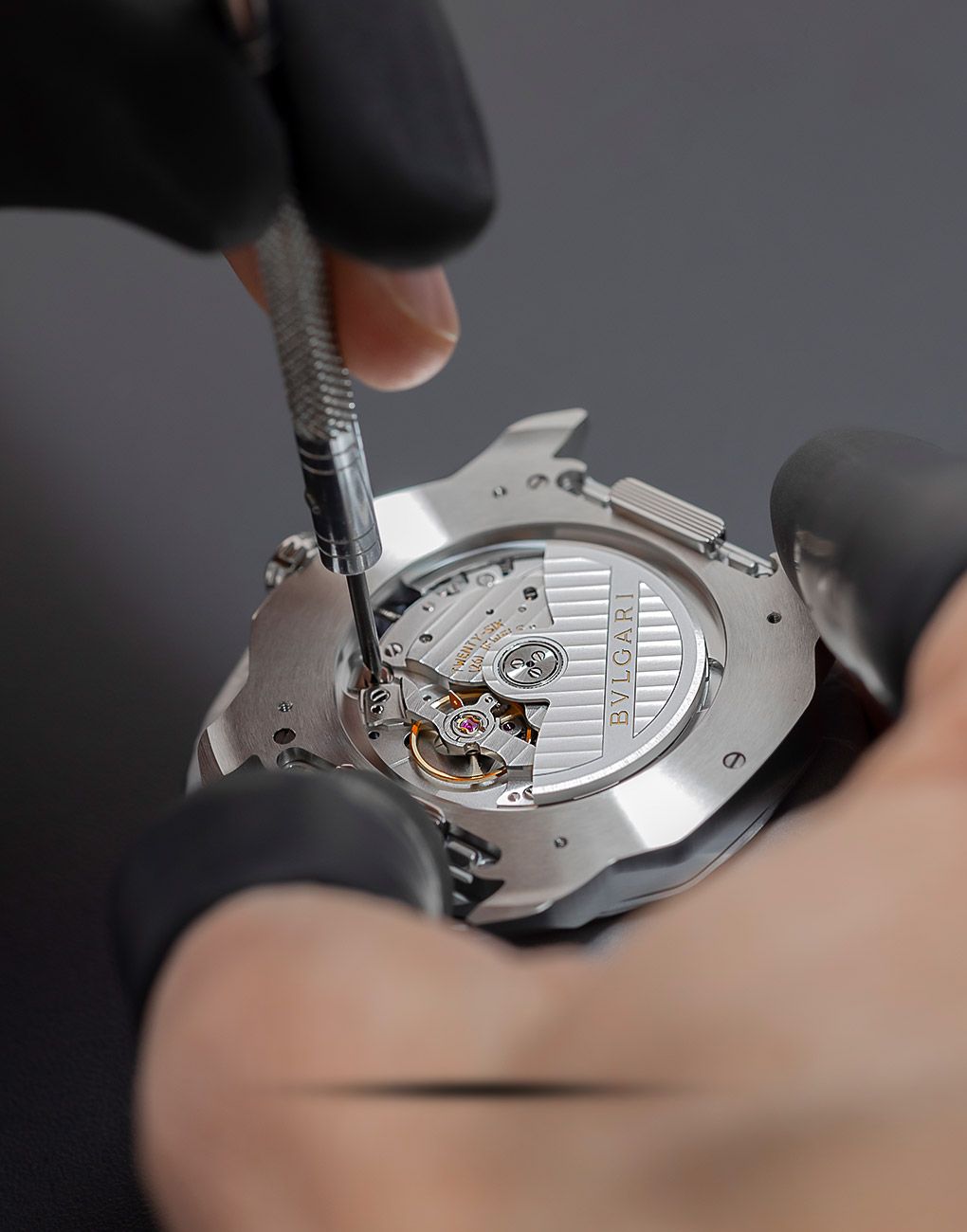
This is not speculation. It is an open secret documented by investigative journalists and acknowledged privately by industry insiders. Watch cases, bracelets, dials, hands, and even some movement components are manufactured in Chinese factories -- particularly in Shenzhen and Dongguan -- and shipped to Switzerland for assembly. Under Swiss law, a watch qualifies as "Swiss Made" if its movement is Swiss, its movement is cased up in Switzerland, and its final inspection occurs in Switzerland. The 2017 revision of the Swiss Made ordinance raised the domestic value-add threshold to 60 percent, but the definition of "value" is elastic enough to permit substantial foreign component sourcing.
The implications for collectors are significant. When a collector pays a premium for a "Swiss Made" watch, they are paying in part for a provenance narrative that may be more nuanced than the caseback implies. This is not to say that Swiss assembly, regulation, and quality control are without value -- they are substantial. But the binary distinction between "Swiss" and "Chinese" watchmaking is far less clear than marketing would suggest.
The distinction between Swiss and Chinese watchmaking is no longer a question of quality. It is a question of branding, heritage, and the narratives we choose to believe.
Why the Skepticism Is Changing
Several forces are eroding Western collectors' resistance to Chinese horology. The first is simple exposure. Social media, particularly YouTube channels like Watchfinder & Co. and collector forums on Watchuseek, have given Chinese watches visibility that traditional media gatekeepers once denied them. When a respected reviewer examines a Beijing Watch Factory tourbillon under a microscope and finds finishing that rivals watches costing ten times as much, the old prejudices become harder to sustain.
The second force is generational. Younger collectors, particularly those who entered the hobby through microbrands and independent watchmaking, are less invested in the Swiss-centric hierarchy that has dominated horology for a century. They evaluate watches on their merits -- design, finishing, movement quality, value proposition -- rather than on the flag printed on the dial.
The third, and perhaps most powerful, force is the sheer quality trajectory. Chinese watchmaking in 2026 is incomparably better than it was in 2016, which was itself a dramatic leap from 2006. The learning curve has been steep and relentless. Factories that once produced crude copies of ETA movements now manufacture calibers with silicon balance springs, 72-hour power reserves, and chronometer-grade accuracy. The gap between Chinese and Swiss mechanical watchmaking, while still real, is narrowing at a pace that should concern -- and inspire -- the traditional industry.
What This Means for Collectors
For the collector with an open mind and a discerning eye, Chinese haute horlogerie represents an extraordinary opportunity. The value proposition -- access to genuine complications, hand-finishing, and artistic dials at a fraction of Swiss prices -- is compelling on its face. But the deeper opportunity is participation in a moment of historical inflection. The collectors who acquired early Grand Seikos in the 1990s, when the brand was virtually unknown outside Japan, are sitting on pieces that have appreciated enormously in both value and prestige. A similar arc is plausible for the best Chinese watches.
This is not to suggest that every Chinese watch is a hidden gem, any more than every Swiss watch is a masterpiece. Quality varies enormously, and the absence of a robust secondary market means that resale values for most Chinese brands remain low. Provenance documentation -- service records, authentication, ownership history -- becomes even more critical for pieces outside the established Swiss and German provenance infrastructure.
The wise collector in 2026 approaches Chinese horology the way a wise art collector approaches an emerging scene: with curiosity, with rigor, and with the understanding that the map of excellence is being redrawn. The only certainty is that ignoring it entirely is no longer a defensible position.
The Provenary Editorial Team
Expert perspectives on the art and science of watch collecting, market analysis, and the stories behind the timepieces that define horological history.