Watch Care 101: How to Keep Your Collection Looking (and Running) Like New
You have done the research. You have found the watch. You have made the purchase. Now comes the part that nobody talks about enough: keeping your watch in the condition it deserves. A luxury timepiece is engineered to last generations, but only if you treat it with a modicum of care and intelligence. The good news is that watch care is not complicated -- it just requires awareness of a few key principles that many collectors learn the hard way.
This guide covers everything from daily wearing habits to long-term storage, from the magnetic fields hiding in your everyday devices to the truth about what "water resistant to 100 meters" actually means. Consider it your complete reference for keeping every watch in your collection looking and running like the day you unboxed it.
Daily Wearing: The Habits That Matter
The single most important thing you can do for a mechanical watch is also the simplest: wear it. Mechanical movements are designed to run. The lubricants inside perform best when circulated by the movement's operation. A watch that sits unworn for extended periods can experience lubricant migration, leading to increased friction and wear. You do not need to wear every piece daily, but rotating through your collection regularly is genuinely good for the watches.
A few morning habits worth cultivating: wind manual-wind watches before putting them on your wrist -- the stable motion is gentler on the crown and stem. For automatics, give the crown twenty to thirty gentle turns if the watch has been sitting for more than a day. And one critical rule: never adjust the date between roughly 9 p.m. and 3 a.m. During this window, the date-change mechanism is engaged in most movements, and forcing it can bend or break delicate components. This is one of the most common causes of mechanical damage, and it is entirely preventable.
Water Resistance: What the Numbers Actually Mean
Water resistance ratings are among the most misunderstood specifications in watchmaking. Here is what the numbers on the caseback actually tell you -- and more importantly, what they do not.
30 meters (3 ATM) means splash-proof only -- no hand washing, no showers. The rating refers to static laboratory pressure, not real-world conditions. 50 meters (5 ATM) is safe for hand washing and light rain, but still not a shower watch -- soap and hot water degrade gaskets. 100 meters (10 ATM) is the threshold for genuine swimming and snorkeling; most sport watches from Omega, Tudor, and Longines meet or exceed this. 200 meters and above covers purpose-built dive watches like the Rolex Submariner (300m) and Omega Seamaster (300m).
The crucial caveat
Water resistance is not permanent. Gaskets degrade over time from heat, UV, cosmetics, and aging. Have water resistance tested annually if you regularly expose your watch to water, and always after servicing or impact. And never operate the crown or pushers underwater unless the watch is specifically designed for it -- even a 300-meter-rated watch can flood if the crown is pulled out while submerged.
The Invisible Threat: Magnetic Fields
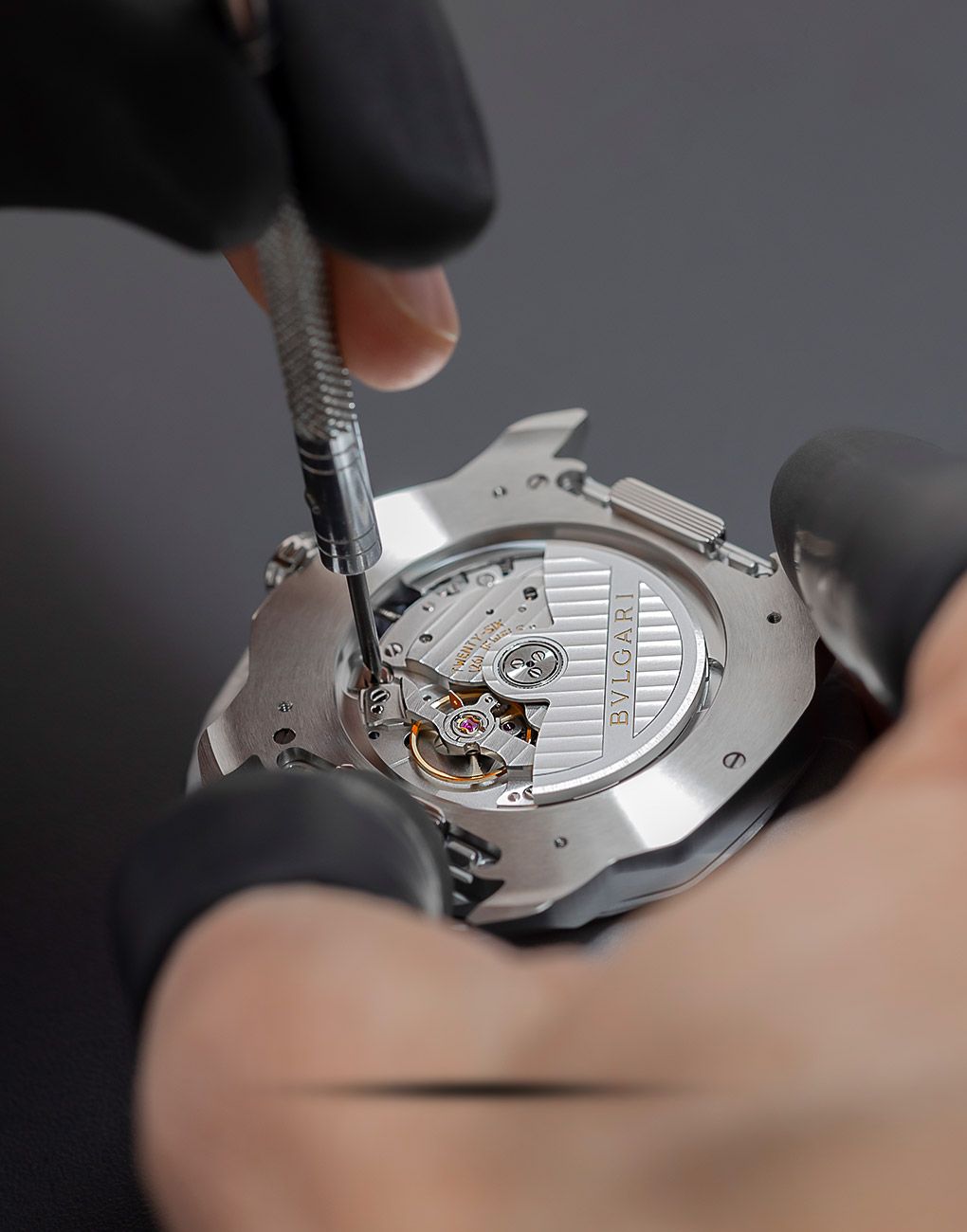
Magnetism is the silent enemy of mechanical watches. When a movement is exposed to a strong magnetic field, the hairspring -- the delicate coiled spring that regulates the watch's timekeeping -- can become magnetized. Its coils stick together, shortening the effective length of the spring, and the watch begins running fast. Sometimes dramatically fast -- a magnetized watch might gain minutes per day instead of seconds.
The insidious part is how common magnetic fields are in daily life. Your laptop generates a magnetic field. Your tablet generates one. The magnetic clasp on your iPad case, the speakers in your phone, induction cooktops, magnetic money clips, even the magnetic closure on your handbag -- all of these can magnetize a watch if it sits too close for too long.
The good news: magnetization is usually not permanent or damaging. A watchmaker can demagnetize a movement in seconds using a demagnetizer tool (you can even buy one yourself for about $15 to $30). The better news: many modern watches are designed with antimagnetic properties. Omega's Master Chronometer movements resist magnetic fields up to 15,000 gauss. Rolex's Milgauss was purpose-built for magnetic environments. The IWC Ingenieur uses a soft iron inner case as a Faraday cage. But if your watch does not have specific antimagnetic features, keep it at least a few inches from strong magnetic sources, especially during extended storage.
Storage: Doing Right by the Watches You Are Not Wearing
How you store your watches when they are not on your wrist matters more than most people realize. Here are the key principles.
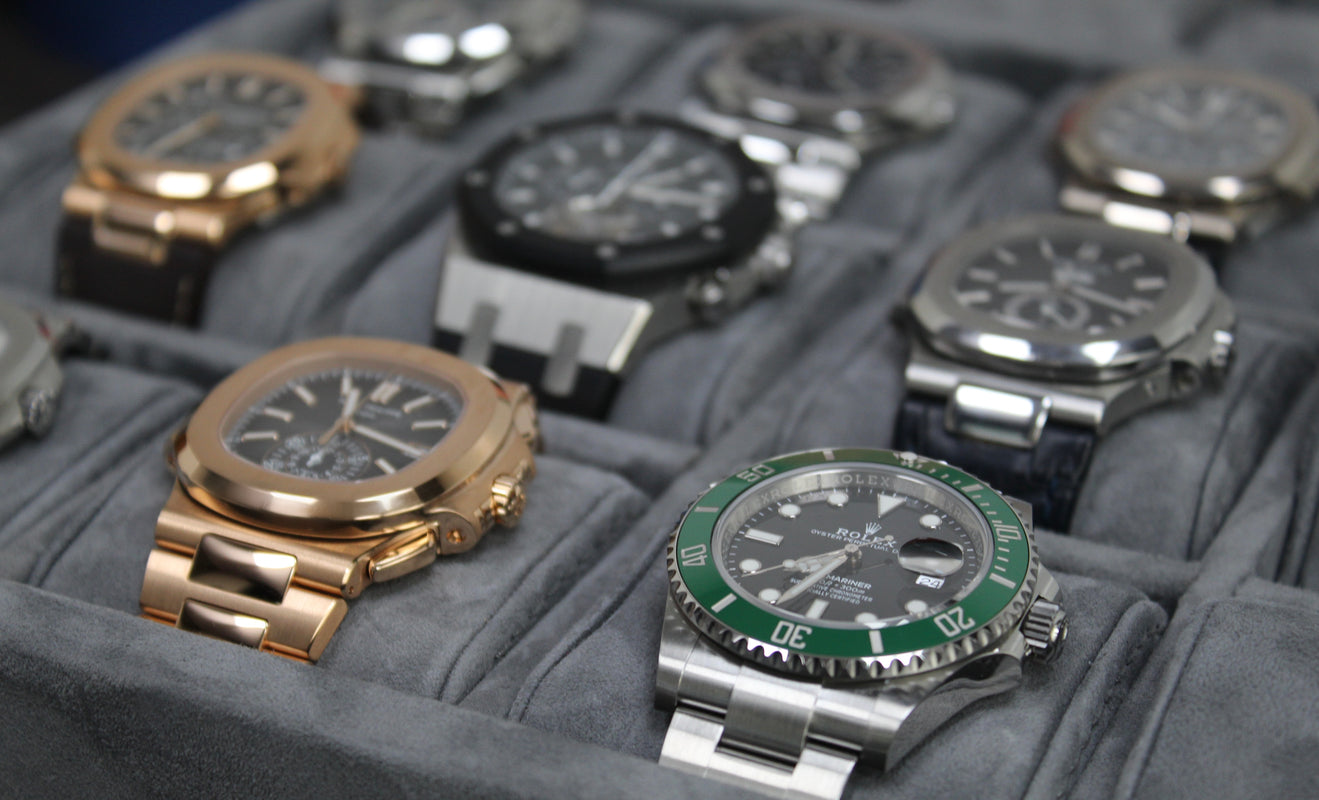
Keep watches in a cool, dry place away from direct sunlight. UV radiation fades dials over time, and temperature extremes affect lubricant viscosity and gasket integrity. Store watches in individual padded compartments -- even sapphire crystals can be scratched by other sapphire crystals or diamond jewelry stored nearby. And here is a free accuracy tip: position matters. Placing a mechanical watch dial-up or crown-up overnight can improve timekeeping, since most movements are regulated in the dial-up position. Experiment with different positions to find what works best for your specific watch.
The watch winder debate
Watch winders keep automatic watches wound when you are not wearing them. They are genuinely useful for complicated watches with perpetual calendars or annual calendars, where resetting everything after the watch stops is tedious. For simpler watches, winders are optional -- some watchmakers advise against constant use, arguing that continuous operation creates unnecessary mechanical stress. The honest answer is that the difference is marginal either way for modern movements. If you do use one, set it to the correct turns per day (TPD) for your movement -- most require 650 to 800 TPD.
Strap and Bracelet Care
The strap or bracelet is the part of your watch that takes the most abuse -- it is in constant contact with your skin, sweat, sunscreen, and the general grime of daily life. Different materials require different approaches.
Leather is beautiful but vulnerable. Avoid submerging it, let it air dry naturally if it gets wet (never use heat), and rotate between straps to let each one breathe. A quality strap from Hirsch will last one to two years with daily wear; leather conditioner every few months extends that. Metal bracelets are more resilient but accumulate grime in the links. Clean periodically with warm water, mild dish soap, and a soft toothbrush -- but detach the bracelet from the watch head first, as ultrasonic cleaning can affect water resistance gaskets. Rubber and silicone straps are the lowest-maintenance option: rinse after saltwater exposure, clean with mild soap as needed, and store away from direct sunlight to prevent UV degradation.
Crystal Care and Scratch Prevention
Modern luxury watches use one of three crystal materials, each with different properties.
Sapphire crystal (standard on Swiss luxury watches above $1,000) is a 9 on the Mohs hardness scale -- essentially scratchproof in daily wear, but more brittle than other types and can crack on hard impact. Mineral crystal (common under $500) scratches more easily but is more shatter-resistant; minor scratches can sometimes be polished out professionally. Hardlex (Seiko's proprietary crystal) falls between the two. For all types, the best prevention is awareness: take your watch off before manual labor or any activity where hard impacts are likely.
Service Intervals: A Brand-by-Brand Guide
Different manufacturers recommend different service intervals based on their movements' design and lubrication technology. Here is a practical overview of what the major brands suggest.
Rolex recommends service every ten years for modern movements equipped with the Chronergy escapement (calibers 3200-series and above). Older calibers should be serviced every five to seven years. Omega recommends every eight years for their co-axial movements, which feature a proprietary escapement design that reduces friction. Patek Philippe recommends every three to five years for simple calibers and more frequently for complications. Jaeger-LeCoultre and IWC recommend every five to eight years. Grand Seiko recommends every three to four years for their mechanical movements.
These are guidelines, not deadlines. If your watch is running within its rated accuracy and the power reserve feels normal, it is likely fine even if the recommended interval has passed. Conversely, if you notice a sudden change in accuracy or power reserve, do not wait for the calendar -- bring it in for inspection.
A watch that is serviced on time costs hundreds. A watch that is serviced too late costs thousands.
Insurance and Documentation: Protecting Your Investment
We have covered the physical care of your watches. Now let us talk about the administrative side -- which, frankly, is just as important.
Photograph every watch in your collection from multiple angles, in good lighting, at least once a year. Include the caseback, the serial number, and any distinguishing marks. These photos serve as both condition documentation and insurance evidence in case of theft or loss.
Keep all purchase documentation -- receipts, warranty cards, certificates of authenticity, service records. Store digital copies in a secure cloud location separate from the physical documents. If you use Provenary to manage your collection, all of this documentation lives in one place, timestamped and organized, creating a provenance record that grows in value alongside the watch itself.
Review your insurance coverage annually. Watch values fluctuate, and a policy written when your Rolex was worth $8,000 may be inadequate if the market has moved it to $12,000. Specialty watch insurance providers like Jewelers Mutual and Hodinkee Insurance offer policies designed specifically for collectors, often with more favorable terms than adding a rider to your homeowner's policy.
Track every service -- not just the date and cost, but what was done, what parts were replaced, and who performed the work. A watch with a complete, documented service history is worth meaningfully more than the same watch without one. This is one of Provenary's core features: creating an unbroken chain of care documentation that follows your watch wherever it goes.
Building Good Habits
Watch care does not need to be obsessive or time-consuming. It is really about building a handful of good habits and sticking to them. Wind your watches properly. Keep them away from strong magnets. Store them sensibly. Clean your bracelets periodically. Do not ignore accuracy changes. Document everything.
The reward for this modest investment of attention is a collection that looks stunning, runs reliably, and retains its value for decades to come. These are machines built to outlast their owners. With a little care, they will do exactly that -- and the next person to wear your watch will inherit not just a timepiece, but a testament to the care you gave it.
Your watches deserve to be worn, enjoyed, and looked after. Everything else is just details -- and now you know all of them.
The Provenary Editorial Team
Expert perspectives on the art and science of watch collecting, market analysis, and the stories behind the timepieces that define horological history.